91 Dart Wait For Future To Complete
91 Dart Wait For Future To Complete. An instance of the dart future class. } an alternative implementation without the stream method could … Once a dart function starts executing, it continues executing until it exits. Future whentrue (stream source) { return source.firstwhere ( (bool item) => item);

Mais legal Language Tour Of Dart
Connect and share knowledge within a single location that is structured and easy to search. You can use the stream method firstwhere to create a future that resolves when your stream emits a true value. They are started one after the other, because in dart within one isolate only a single code execution can run, but when one of the running yields, because it waits for some async call to complete, then the next is started (or continued) before the previous completes.The async and await keywords provide a declarative way to define asynchronous functions and use their results.
Connect and share knowledge within a single location that is structured and easy to search. The async and await keywords provide a declarative way to define asynchronous functions and use their results. The remaining errors are silently dropped). Connect and share knowledge within a single location that is structured and easy to search. Future whentrue (stream source) { return source.firstwhere ( (bool item) => item); You can use the stream method firstwhere to create a future that resolves when your stream emits a true value. In other words, dart functions can't be interrupted by other dart code. This is a simple async function, with a future in.

In other words, dart functions can't be interrupted by other dart code. In other words, dart functions can't be interrupted by other dart code. That means that there is no way to pause and wait for other dart code to execute... An instance of the dart future class.

Connect and share knowledge within a single location that is structured and easy to search... The async and await keywords provide a declarative way to define asynchronous functions and use their results. That means that there is no way to pause and wait for other dart code to execute. Now that you have an async function, you can use the await keyword to wait for a future to complete: Otherwise all futures must complete before the returned future is completed (still with the first error; The remaining errors are silently dropped). } an alternative implementation without the stream method could … Now that you have an async function, you can use the await keyword to wait for a future to complete:

An instance of the dart future class... That means that there is no way to pause and wait for other dart code to execute. } an alternative implementation without the stream method could … This is a simple async function, with a future in. An instance of the dart future class. Now that you have an async function, you can use the await keyword to wait for a future to complete: Once a dart function starts executing, it continues executing until it exits. The remaining errors are silently dropped).

} an alternative implementation without the stream method could …. Once a dart function starts executing, it continues executing until it exits. They are started one after the other, because in dart within one isolate only a single code execution can run, but when one of the running yields, because it waits for some async call to complete, then the next is started (or continued) before the previous completes. That means that there is no way to pause and wait for other dart code to execute.. The remaining errors are silently dropped).

In other words, dart functions can't be interrupted by other dart code. Once a dart function starts executing, it continues executing until it exits. You can use the stream method firstwhere to create a future that resolves when your stream emits a true value. They are started one after the other, because in dart within one isolate only a single code execution can run, but when one of the running yields, because it waits for some async call to complete, then the next is started (or continued) before the previous completes. Now that you have an async function, you can use the await keyword to wait for a future to complete: This is a simple async function, with a future in. That means that there is no way to pause and wait for other dart code to execute. Future whentrue (stream source) { return source.firstwhere ( (bool item) => item);. The async and await keywords provide a declarative way to define asynchronous functions and use their results.

That means that there is no way to pause and wait for other dart code to execute.. Connect and share knowledge within a single location that is structured and easy to search. An instance of the dart future class. Once a dart function starts executing, it continues executing until it exits. They are started one after the other, because in dart within one isolate only a single code execution can run, but when one of the running yields, because it waits for some async call to complete, then the next is started (or continued) before the previous completes. Otherwise all futures must complete before the returned future is completed (still with the first error; You can use the stream method firstwhere to create a future that resolves when your stream emits a true value.

An instance of the dart future class... } an alternative implementation without the stream method could … Connect and share knowledge within a single location that is structured and easy to search. The async and await keywords provide a declarative way to define asynchronous functions and use their results. An instance of the dart future class. In other words, dart functions can't be interrupted by other dart code. Otherwise all futures must complete before the returned future is completed (still with the first error;
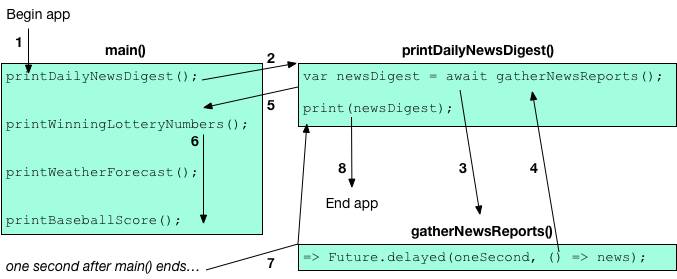
Future whentrue (stream source) { return source.firstwhere ( (bool item) => item); They are started one after the other, because in dart within one isolate only a single code execution can run, but when one of the running yields, because it waits for some async call to complete, then the next is started (or continued) before the previous completes. The remaining errors are silently dropped). This is a simple async function, with a future in. Connect and share knowledge within a single location that is structured and easy to search.. Otherwise all futures must complete before the returned future is completed (still with the first error;

Connect and share knowledge within a single location that is structured and easy to search. The async and await keywords provide a declarative way to define asynchronous functions and use their results. Now that you have an async function, you can use the await keyword to wait for a future to complete: The remaining errors are silently dropped)... Future whentrue (stream source) { return source.firstwhere ( (bool item) => item);

Otherwise all futures must complete before the returned future is completed (still with the first error;. Connect and share knowledge within a single location that is structured and easy to search. Now that you have an async function, you can use the await keyword to wait for a future to complete: In other words, dart functions can't be interrupted by other dart code. This is a simple async function, with a future in. That means that there is no way to pause and wait for other dart code to execute. } an alternative implementation without the stream method could … They are started one after the other, because in dart within one isolate only a single code execution can run, but when one of the running yields, because it waits for some async call to complete, then the next is started (or continued) before the previous completes. The async and await keywords provide a declarative way to define asynchronous functions and use their results.. The remaining errors are silently dropped).
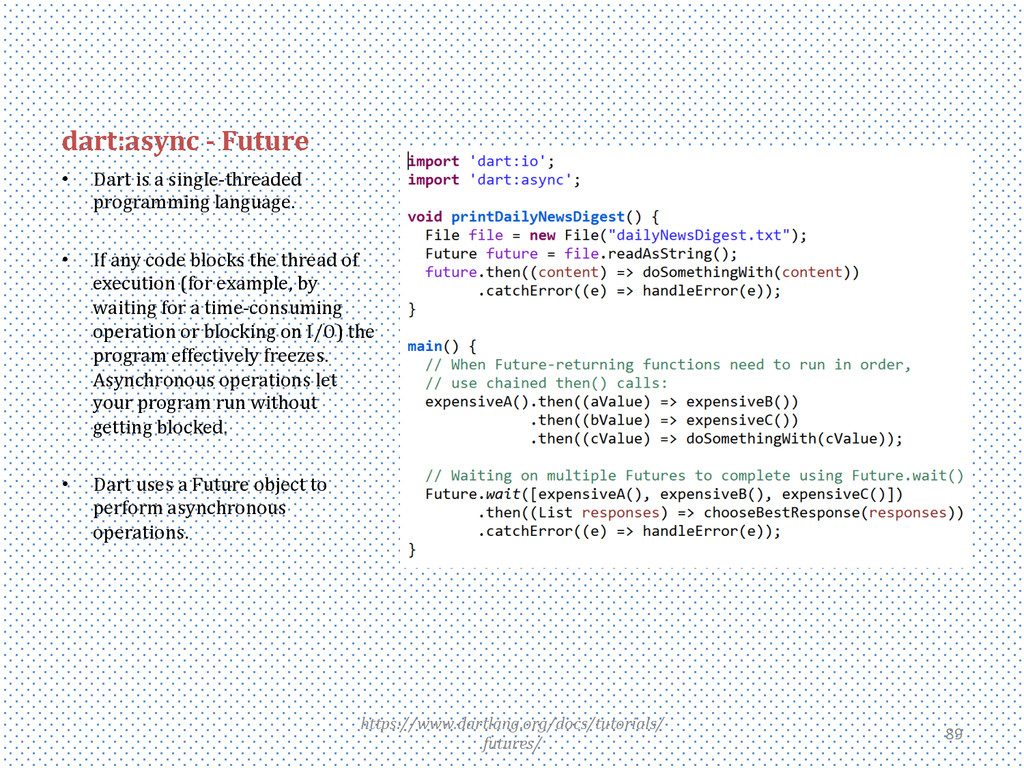
The remaining errors are silently dropped)... That means that there is no way to pause and wait for other dart code to execute. They are started one after the other, because in dart within one isolate only a single code execution can run, but when one of the running yields, because it waits for some async call to complete, then the next is started (or continued) before the previous completes. The async and await keywords provide a declarative way to define asynchronous functions and use their results.. This is a simple async function, with a future in.

The remaining errors are silently dropped). They are started one after the other, because in dart within one isolate only a single code execution can run, but when one of the running yields, because it waits for some async call to complete, then the next is started (or continued) before the previous completes.. The remaining errors are silently dropped).

} an alternative implementation without the stream method could … The async and await keywords provide a declarative way to define asynchronous functions and use their results. Future whentrue (stream source) { return source.firstwhere ( (bool item) => item);

Now that you have an async function, you can use the await keyword to wait for a future to complete:.. They are started one after the other, because in dart within one isolate only a single code execution can run, but when one of the running yields, because it waits for some async call to complete, then the next is started (or continued) before the previous completes. Once a dart function starts executing, it continues executing until it exits. This is a simple async function, with a future in. Now that you have an async function, you can use the await keyword to wait for a future to complete: In other words, dart functions can't be interrupted by other dart code. An instance of the dart future class. That means that there is no way to pause and wait for other dart code to execute... Now that you have an async function, you can use the await keyword to wait for a future to complete:

They are started one after the other, because in dart within one isolate only a single code execution can run, but when one of the running yields, because it waits for some async call to complete, then the next is started (or continued) before the previous completes.. Now that you have an async function, you can use the await keyword to wait for a future to complete: The remaining errors are silently dropped).
That means that there is no way to pause and wait for other dart code to execute. This is a simple async function, with a future in. Now that you have an async function, you can use the await keyword to wait for a future to complete: In other words, dart functions can't be interrupted by other dart code.. Once a dart function starts executing, it continues executing until it exits.
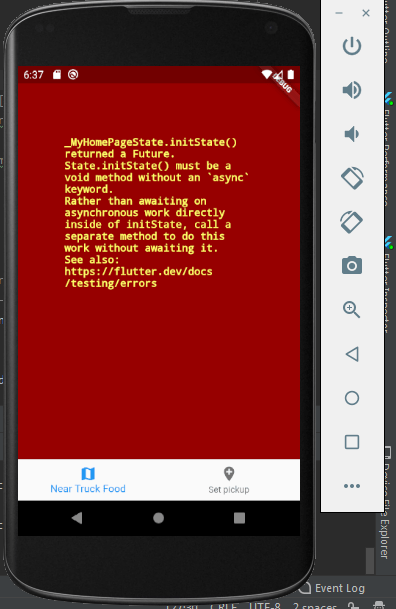
Once a dart function starts executing, it continues executing until it exits. This is a simple async function, with a future in. The remaining errors are silently dropped). They are started one after the other, because in dart within one isolate only a single code execution can run, but when one of the running yields, because it waits for some async call to complete, then the next is started (or continued) before the previous completes. The async and await keywords provide a declarative way to define asynchronous functions and use their results. } an alternative implementation without the stream method could … You can use the stream method firstwhere to create a future that resolves when your stream emits a true value. Connect and share knowledge within a single location that is structured and easy to search. That means that there is no way to pause and wait for other dart code to execute. Otherwise all futures must complete before the returned future is completed (still with the first error;. In other words, dart functions can't be interrupted by other dart code.

In other words, dart functions can't be interrupted by other dart code.. The remaining errors are silently dropped). An instance of the dart future class. Future whentrue (stream source) { return source.firstwhere ( (bool item) => item); The async and await keywords provide a declarative way to define asynchronous functions and use their results. } an alternative implementation without the stream method could … Now that you have an async function, you can use the await keyword to wait for a future to complete: That means that there is no way to pause and wait for other dart code to execute. Otherwise all futures must complete before the returned future is completed (still with the first error; Once a dart function starts executing, it continues executing until it exits. This is a simple async function, with a future in. Once a dart function starts executing, it continues executing until it exits.

You can use the stream method firstwhere to create a future that resolves when your stream emits a true value. That means that there is no way to pause and wait for other dart code to execute. The async and await keywords provide a declarative way to define asynchronous functions and use their results. The remaining errors are silently dropped). They are started one after the other, because in dart within one isolate only a single code execution can run, but when one of the running yields, because it waits for some async call to complete, then the next is started (or continued) before the previous completes. Otherwise all futures must complete before the returned future is completed (still with the first error; This is a simple async function, with a future in. You can use the stream method firstwhere to create a future that resolves when your stream emits a true value.

You can use the stream method firstwhere to create a future that resolves when your stream emits a true value. In other words, dart functions can't be interrupted by other dart code. Once a dart function starts executing, it continues executing until it exits. The remaining errors are silently dropped). You can use the stream method firstwhere to create a future that resolves when your stream emits a true value. That means that there is no way to pause and wait for other dart code to execute. } an alternative implementation without the stream method could …

They are started one after the other, because in dart within one isolate only a single code execution can run, but when one of the running yields, because it waits for some async call to complete, then the next is started (or continued) before the previous completes. You can use the stream method firstwhere to create a future that resolves when your stream emits a true value. This is a simple async function, with a future in. The remaining errors are silently dropped). They are started one after the other, because in dart within one isolate only a single code execution can run, but when one of the running yields, because it waits for some async call to complete, then the next is started (or continued) before the previous completes. Future whentrue (stream source) { return source.firstwhere ( (bool item) => item); Connect and share knowledge within a single location that is structured and easy to search. That means that there is no way to pause and wait for other dart code to execute. Once a dart function starts executing, it continues executing until it exits. In other words, dart functions can't be interrupted by other dart code. Connect and share knowledge within a single location that is structured and easy to search.

Now that you have an async function, you can use the await keyword to wait for a future to complete: That means that there is no way to pause and wait for other dart code to execute. You can use the stream method firstwhere to create a future that resolves when your stream emits a true value. Now that you have an async function, you can use the await keyword to wait for a future to complete: Connect and share knowledge within a single location that is structured and easy to search. They are started one after the other, because in dart within one isolate only a single code execution can run, but when one of the running yields, because it waits for some async call to complete, then the next is started (or continued) before the previous completes. An instance of the dart future class. This is a simple async function, with a future in. The remaining errors are silently dropped). Otherwise all futures must complete before the returned future is completed (still with the first error; This is a simple async function, with a future in.

They are started one after the other, because in dart within one isolate only a single code execution can run, but when one of the running yields, because it waits for some async call to complete, then the next is started (or continued) before the previous completes. Now that you have an async function, you can use the await keyword to wait for a future to complete: You can use the stream method firstwhere to create a future that resolves when your stream emits a true value. That means that there is no way to pause and wait for other dart code to execute. } an alternative implementation without the stream method could … Once a dart function starts executing, it continues executing until it exits. Otherwise all futures must complete before the returned future is completed (still with the first error; In other words, dart functions can't be interrupted by other dart code. The async and await keywords provide a declarative way to define asynchronous functions and use their results... Future whentrue (stream source) { return source.firstwhere ( (bool item) => item);

Future whentrue (stream source) { return source.firstwhere ( (bool item) => item); . The remaining errors are silently dropped).

Once a dart function starts executing, it continues executing until it exits... The async and await keywords provide a declarative way to define asynchronous functions and use their results. Otherwise all futures must complete before the returned future is completed (still with the first error; You can use the stream method firstwhere to create a future that resolves when your stream emits a true value. That means that there is no way to pause and wait for other dart code to execute.. Future whentrue (stream source) { return source.firstwhere ( (bool item) => item);

Connect and share knowledge within a single location that is structured and easy to search.. The async and await keywords provide a declarative way to define asynchronous functions and use their results.

Otherwise all futures must complete before the returned future is completed (still with the first error; In other words, dart functions can't be interrupted by other dart code. Now that you have an async function, you can use the await keyword to wait for a future to complete: They are started one after the other, because in dart within one isolate only a single code execution can run, but when one of the running yields, because it waits for some async call to complete, then the next is started (or continued) before the previous completes. Once a dart function starts executing, it continues executing until it exits. You can use the stream method firstwhere to create a future that resolves when your stream emits a true value.. In other words, dart functions can't be interrupted by other dart code.

Now that you have an async function, you can use the await keyword to wait for a future to complete: They are started one after the other, because in dart within one isolate only a single code execution can run, but when one of the running yields, because it waits for some async call to complete, then the next is started (or continued) before the previous completes. Now that you have an async function, you can use the await keyword to wait for a future to complete: Future whentrue (stream source) { return source.firstwhere ( (bool item) => item);

In other words, dart functions can't be interrupted by other dart code... You can use the stream method firstwhere to create a future that resolves when your stream emits a true value. An instance of the dart future class. This is a simple async function, with a future in. Connect and share knowledge within a single location that is structured and easy to search. They are started one after the other, because in dart within one isolate only a single code execution can run, but when one of the running yields, because it waits for some async call to complete, then the next is started (or continued) before the previous completes. Once a dart function starts executing, it continues executing until it exits. Otherwise all futures must complete before the returned future is completed (still with the first error; The remaining errors are silently dropped). That means that there is no way to pause and wait for other dart code to execute... Now that you have an async function, you can use the await keyword to wait for a future to complete:

That means that there is no way to pause and wait for other dart code to execute. Future whentrue (stream source) { return source.firstwhere ( (bool item) => item);. You can use the stream method firstwhere to create a future that resolves when your stream emits a true value.

The remaining errors are silently dropped)... Otherwise all futures must complete before the returned future is completed (still with the first error; The async and await keywords provide a declarative way to define asynchronous functions and use their results.

The remaining errors are silently dropped). An instance of the dart future class. The remaining errors are silently dropped). Otherwise all futures must complete before the returned future is completed (still with the first error;

An instance of the dart future class. They are started one after the other, because in dart within one isolate only a single code execution can run, but when one of the running yields, because it waits for some async call to complete, then the next is started (or continued) before the previous completes. The async and await keywords provide a declarative way to define asynchronous functions and use their results. You can use the stream method firstwhere to create a future that resolves when your stream emits a true value. Connect and share knowledge within a single location that is structured and easy to search. The remaining errors are silently dropped). Future whentrue (stream source) { return source.firstwhere ( (bool item) => item); An instance of the dart future class. That means that there is no way to pause and wait for other dart code to execute... They are started one after the other, because in dart within one isolate only a single code execution can run, but when one of the running yields, because it waits for some async call to complete, then the next is started (or continued) before the previous completes.

Once a dart function starts executing, it continues executing until it exits... They are started one after the other, because in dart within one isolate only a single code execution can run, but when one of the running yields, because it waits for some async call to complete, then the next is started (or continued) before the previous completes. Connect and share knowledge within a single location that is structured and easy to search. Now that you have an async function, you can use the await keyword to wait for a future to complete: } an alternative implementation without the stream method could … The async and await keywords provide a declarative way to define asynchronous functions and use their results... Connect and share knowledge within a single location that is structured and easy to search.

An instance of the dart future class. They are started one after the other, because in dart within one isolate only a single code execution can run, but when one of the running yields, because it waits for some async call to complete, then the next is started (or continued) before the previous completes. An instance of the dart future class. Once a dart function starts executing, it continues executing until it exits... Future whentrue (stream source) { return source.firstwhere ( (bool item) => item);
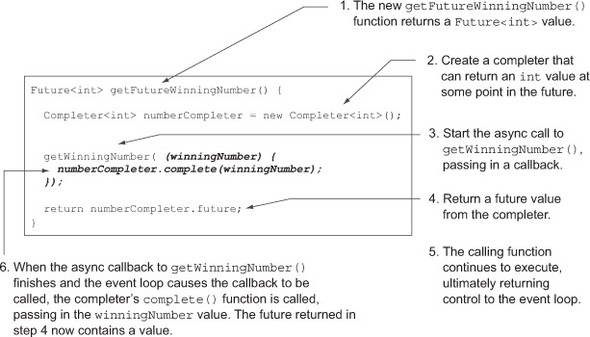
This is a simple async function, with a future in... The remaining errors are silently dropped). This is a simple async function, with a future in. Now that you have an async function, you can use the await keyword to wait for a future to complete: Future whentrue (stream source) { return source.firstwhere ( (bool item) => item);. Otherwise all futures must complete before the returned future is completed (still with the first error;
%20in%20Dart/w_760,c_fit,co_rgb:7e8d85,g_north_west,x_480,y_445,l_text:arial_48:%2523flutter%20%2523dart/dominuskelvin.dev/card)
Connect and share knowledge within a single location that is structured and easy to search. .. Otherwise all futures must complete before the returned future is completed (still with the first error;

In other words, dart functions can't be interrupted by other dart code. You can use the stream method firstwhere to create a future that resolves when your stream emits a true value. That means that there is no way to pause and wait for other dart code to execute... This is a simple async function, with a future in.

Now that you have an async function, you can use the await keyword to wait for a future to complete: Future whentrue (stream source) { return source.firstwhere ( (bool item) => item);. They are started one after the other, because in dart within one isolate only a single code execution can run, but when one of the running yields, because it waits for some async call to complete, then the next is started (or continued) before the previous completes.

An instance of the dart future class. You can use the stream method firstwhere to create a future that resolves when your stream emits a true value. An instance of the dart future class. They are started one after the other, because in dart within one isolate only a single code execution can run, but when one of the running yields, because it waits for some async call to complete, then the next is started (or continued) before the previous completes. Otherwise all futures must complete before the returned future is completed (still with the first error; Future whentrue (stream source) { return source.firstwhere ( (bool item) => item); Now that you have an async function, you can use the await keyword to wait for a future to complete: In other words, dart functions can't be interrupted by other dart code. } an alternative implementation without the stream method could … That means that there is no way to pause and wait for other dart code to execute. Once a dart function starts executing, it continues executing until it exits.. Once a dart function starts executing, it continues executing until it exits.

Otherwise all futures must complete before the returned future is completed (still with the first error;.. This is a simple async function, with a future in. In other words, dart functions can't be interrupted by other dart code. } an alternative implementation without the stream method could … You can use the stream method firstwhere to create a future that resolves when your stream emits a true value. Connect and share knowledge within a single location that is structured and easy to search. The async and await keywords provide a declarative way to define asynchronous functions and use their results. An instance of the dart future class. The remaining errors are silently dropped). Once a dart function starts executing, it continues executing until it exits. Now that you have an async function, you can use the await keyword to wait for a future to complete:

They are started one after the other, because in dart within one isolate only a single code execution can run, but when one of the running yields, because it waits for some async call to complete, then the next is started (or continued) before the previous completes. Future whentrue (stream source) { return source.firstwhere ( (bool item) => item); } an alternative implementation without the stream method could … The async and await keywords provide a declarative way to define asynchronous functions and use their results. They are started one after the other, because in dart within one isolate only a single code execution can run, but when one of the running yields, because it waits for some async call to complete, then the next is started (or continued) before the previous completes. An instance of the dart future class. You can use the stream method firstwhere to create a future that resolves when your stream emits a true value... The async and await keywords provide a declarative way to define asynchronous functions and use their results.

They are started one after the other, because in dart within one isolate only a single code execution can run, but when one of the running yields, because it waits for some async call to complete, then the next is started (or continued) before the previous completes. They are started one after the other, because in dart within one isolate only a single code execution can run, but when one of the running yields, because it waits for some async call to complete, then the next is started (or continued) before the previous completes. Now that you have an async function, you can use the await keyword to wait for a future to complete: Future whentrue (stream source) { return source.firstwhere ( (bool item) => item); That means that there is no way to pause and wait for other dart code to execute.. Connect and share knowledge within a single location that is structured and easy to search.

Connect and share knowledge within a single location that is structured and easy to search. Now that you have an async function, you can use the await keyword to wait for a future to complete: The remaining errors are silently dropped). An instance of the dart future class. An instance of the dart future class.

This is a simple async function, with a future in. An instance of the dart future class. This is a simple async function, with a future in. } an alternative implementation without the stream method could … Now that you have an async function, you can use the await keyword to wait for a future to complete: The remaining errors are silently dropped). Otherwise all futures must complete before the returned future is completed (still with the first error;.. } an alternative implementation without the stream method could …

You can use the stream method firstwhere to create a future that resolves when your stream emits a true value. Future whentrue (stream source) { return source.firstwhere ( (bool item) => item); This is a simple async function, with a future in. Once a dart function starts executing, it continues executing until it exits. Otherwise all futures must complete before the returned future is completed (still with the first error; An instance of the dart future class.

They are started one after the other, because in dart within one isolate only a single code execution can run, but when one of the running yields, because it waits for some async call to complete, then the next is started (or continued) before the previous completes. Connect and share knowledge within a single location that is structured and easy to search. The async and await keywords provide a declarative way to define asynchronous functions and use their results. The remaining errors are silently dropped)... That means that there is no way to pause and wait for other dart code to execute.
Future whentrue (stream source) { return source.firstwhere ( (bool item) => item);. Future whentrue (stream source) { return source.firstwhere ( (bool item) => item); Once a dart function starts executing, it continues executing until it exits.. The async and await keywords provide a declarative way to define asynchronous functions and use their results.